Five WildPosh talks at BCE 2026 look at the overlooked effects of pesticides on wild pollinators
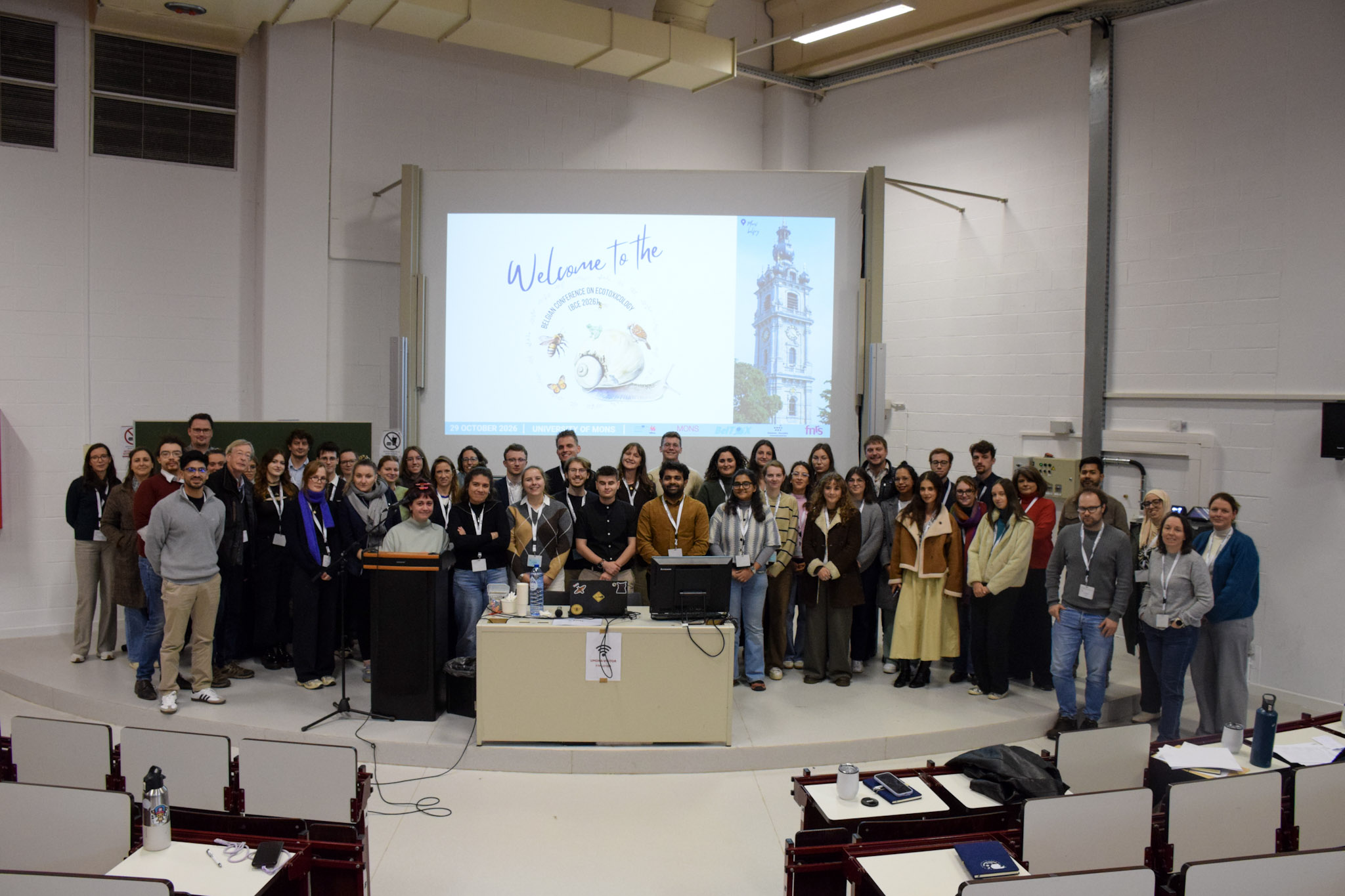
WildPosh research was presented in five talks at the first Belgian Conference on Ecotoxicology (BCE 2026), held at the University of Mons, Belgium, from 28 to 30 October 2026. The conference was organised by WildPosh partners Manon Fievet and Antoine Gekière and brought together researchers, students and professionals working in ecotoxicology and risk assessment.
Rethinking pesticide risk assessment
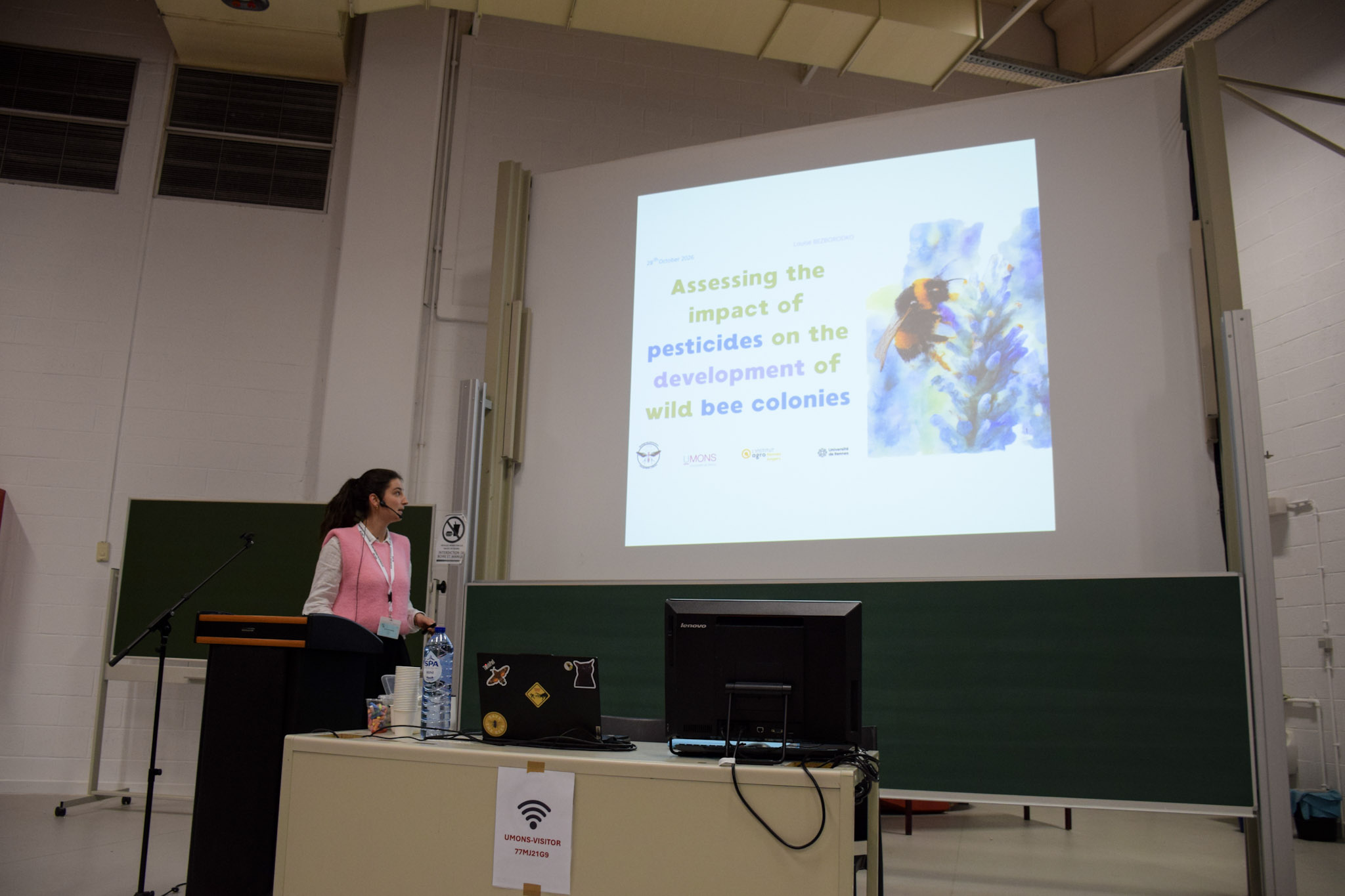
In a plenary lecture, WildPosh partner Julia Osterman (University of Gothenburg) discussed how pesticide risk assessment could be rethought to protect pollinators and biodiversity better. Her research looks for effective ways to reverse the loss of biodiversity and ecosystem services, with a focus on insect pollinators.
Queen behaviour and colony establishment
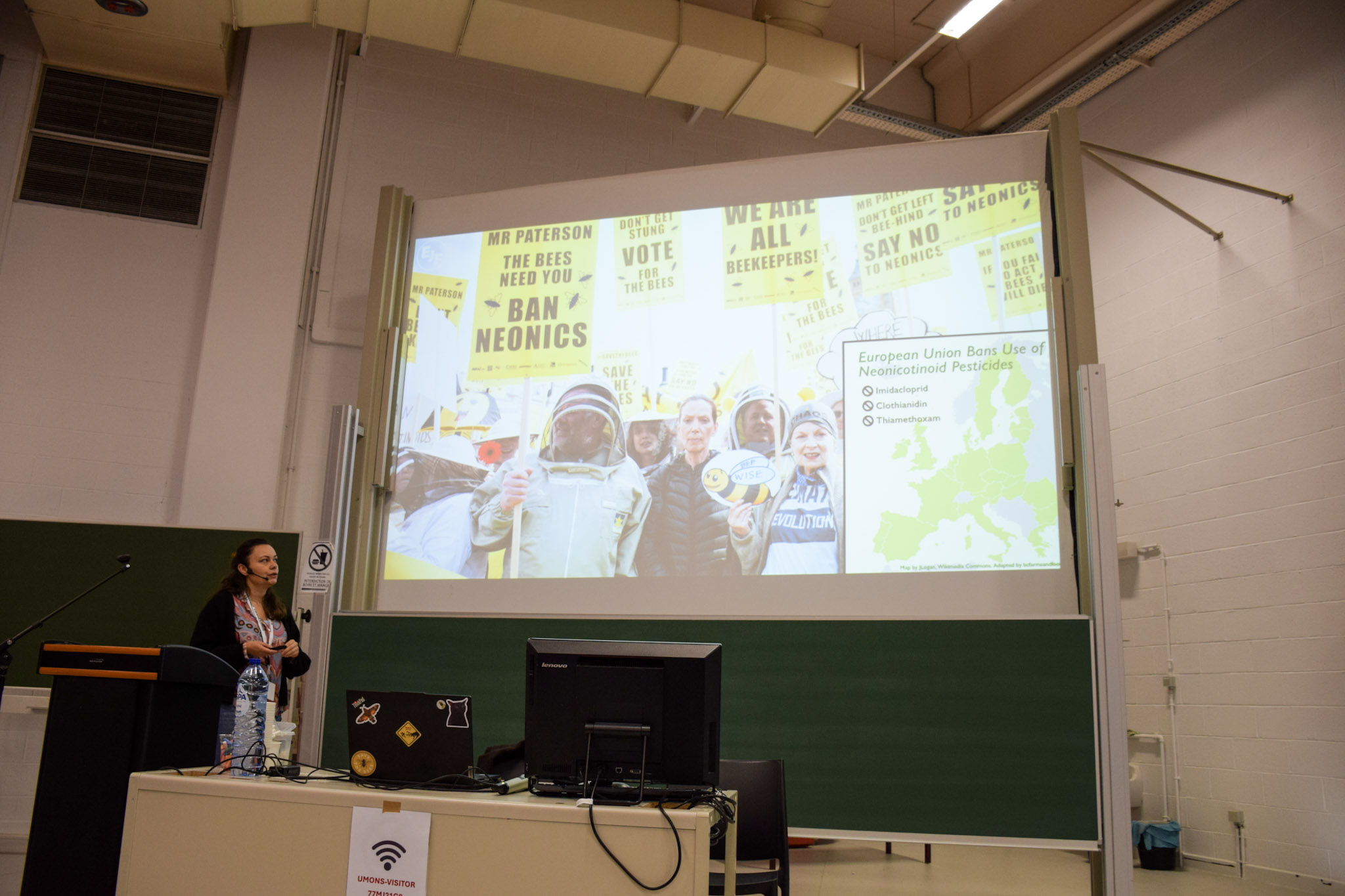
The first weeks of a bumblebee colony depend almost entirely on the queen. Louise Bezborodko (University of Mons) presented a study of chronic exposure to the insecticide acetamiprid, the fungicide tebuconazole and their mixture in the buff-tailed bumblebee (Bombus terrestris). Pesticide exposure disrupted some queen behaviours, including oophagy (eating eggs). This suggests that pesticides may interfere with reproduction when a colony is at its most vulnerable.
Larval development
Arthur Baurain, also from the University of Mons, presented results from tests of the same pesticides and mixture on Bombus terrestris larvae. Chronic exposure changed larval growth rates, which suggests that long-term exposure during early development can have consequences that standard tests on adult bees would miss.
Sleep and daily activity rhythms
Mélusine Hurel (University of Mons) compared the solitary bee Andrena vaga with the reference species Bombus terrestris. Her results showed that exposure to acetamiprid, tebuconazole and their mixture may disrupt daily activity patterns and sleep in the solitary bee. Effects on behaviour like these are rarely part of pesticide risk assessment.
Molecular effects across species and tissues
WildPosh partner Nathan Silva (CNRS) presented work using MALDI mass spectrometry (MALDI-MS) and the MALDI BeeTyping method to track peptide changes in three wild pollinators: the hoverfly Eristalinus aeneus, Bombus terrestris and the solitary bee Colletes hederae. Each was exposed to acetamiprid, cypermethrin or tebuconazole.
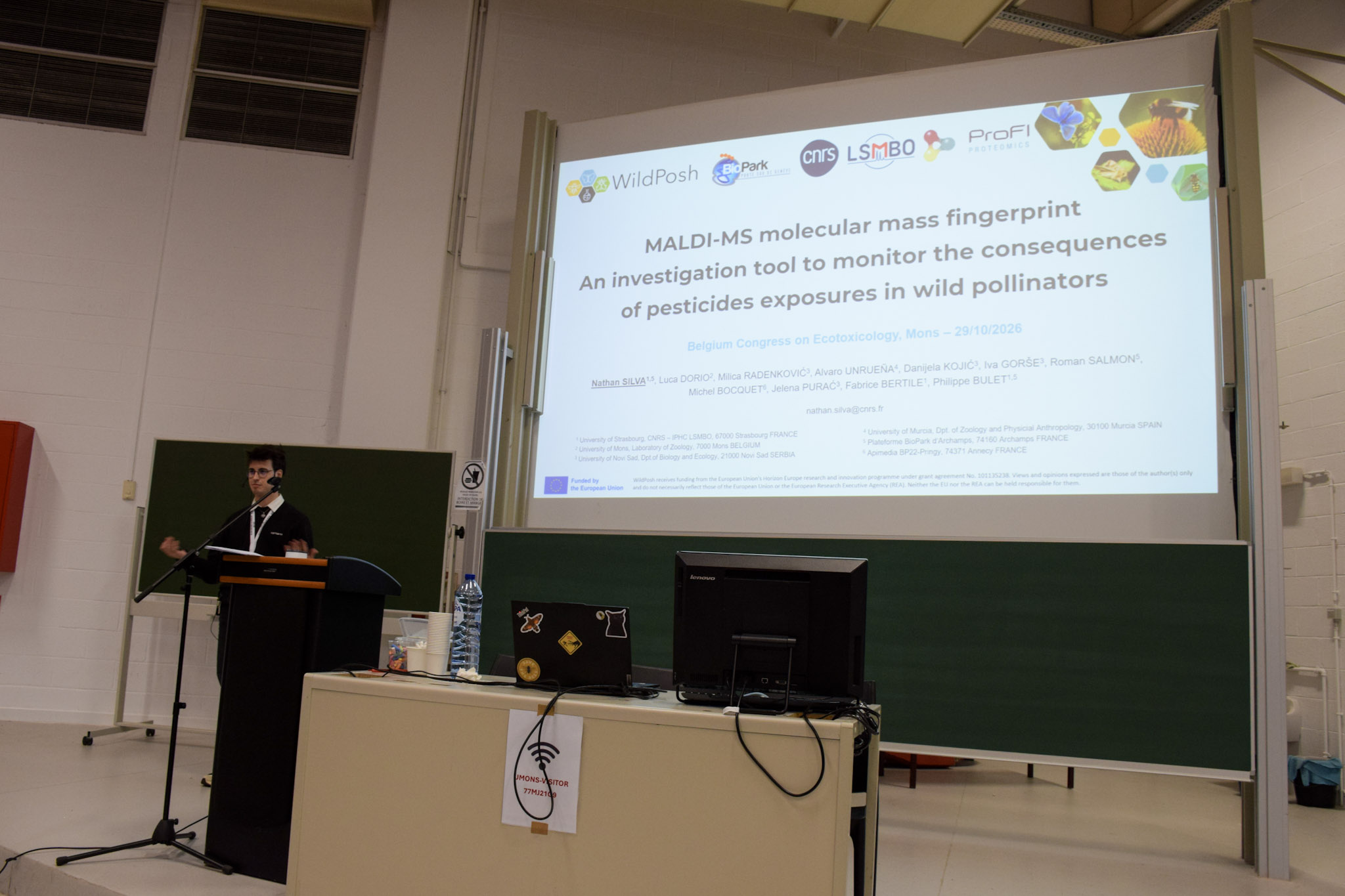
Preliminary results showed that each species had its own molecular response, which varied by treatment and by tissue. Analysing two immune-related tissues revealed effects that would be missed by testing the haemolymph (“blood”) alone. In the next stage, this work will be combined with WildPosh toxicity tests to link visible effects, such as mortality and changes in behaviour, with the molecular changes behind them.
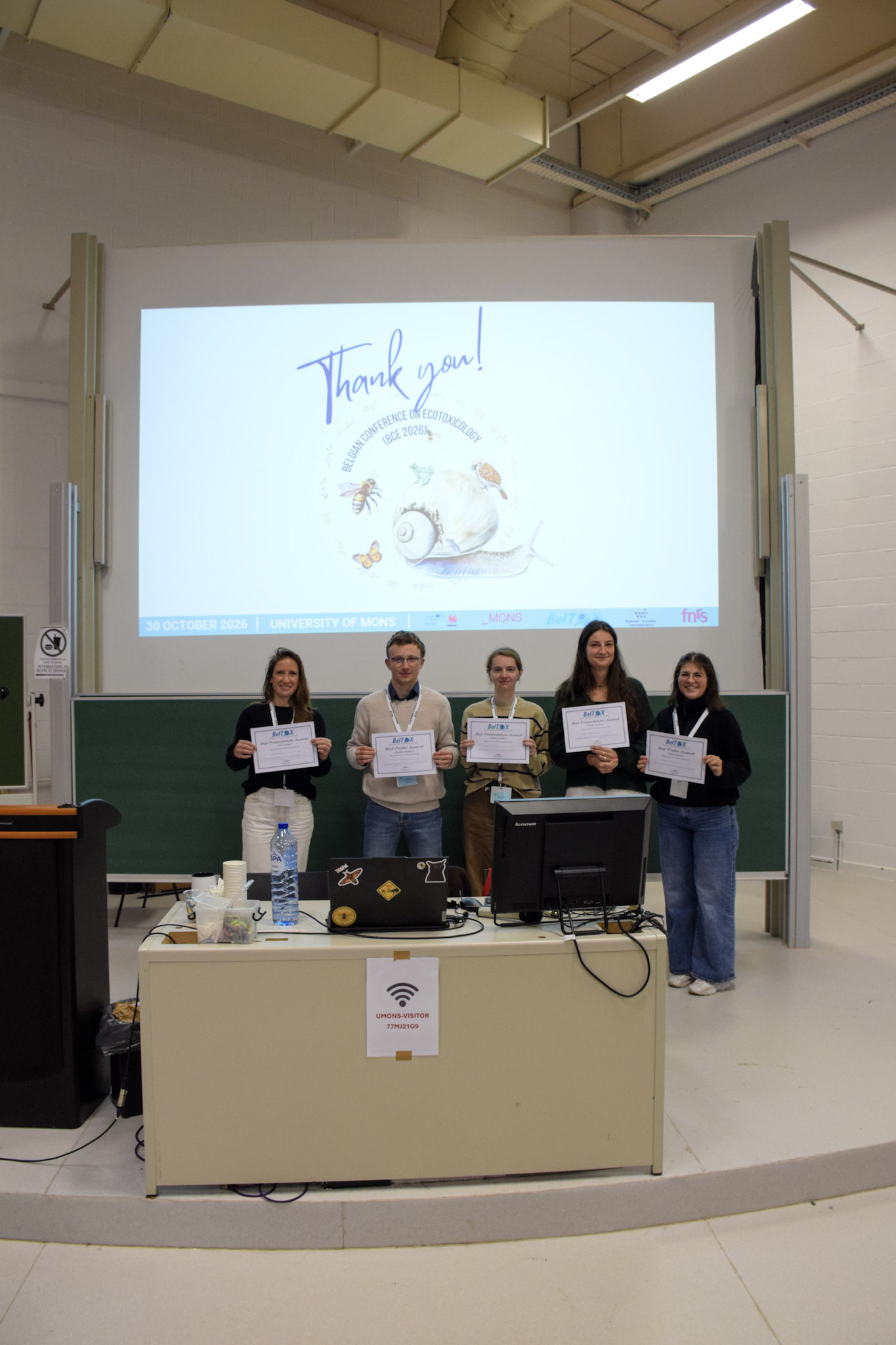
Two awards for Master’s research
Mélusine Hurel received an award for the best Master’s oral presentation for research on 'Effects of chronic exposure to pesticides on the circadian rhythm and sleep of bees', and Louise Bezborodko received the same award for research on 'Assessing the impact of pesticides on the development of wild bee colonies'.
Why it matters for risk assessment
Pesticide risk assessment relies mainly on lethal endpoints and a small number of species, especially the honeybee. The WildPosh talks at BCE 2026 showed effects that fall outside this approach. These include disrupted queen behaviour, slower larval growth, disturbed sleep in a solitary bee, and molecular changes that differ by species and tissue. They point to the need to include more pollinator species, life stages and types of effects in future testing and regulation.